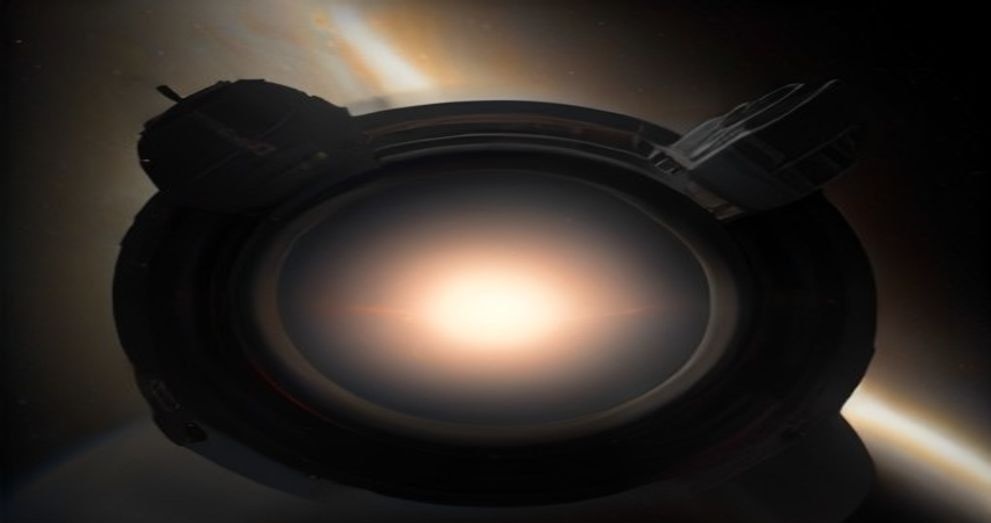
🚀 Space Astronomy Deep-Dive: Next-Generation Cosmic Observatories
This technical monograph evaluates space-based astronomical observatories, optical design physics, cryogenic infrared instrumentation, and exoplanetary spectroscopy under the editorial leadership of Annamae Turner.
The Future of Space Astronomy: Wide-Field Surveyors and Earth-Mappers
The historic achievements of Hubble and the revolutionary infrared acuity of JWST have inaugurated a golden age of astrophysics. Yet, these flagship observatories are fundamentally narrow-field, ‘pencil-beam’ instruments. Hubble and JWST are designed to look with extreme magnification at tiny pinhead-sized patches of the cosmos, making large-scale cosmological surveys of millions of galaxies prohibitively time-consuming.
To map the macro-architecture of the universe, unravel the cosmic acceleration driven by Dark Energy, and directly image habitable Earth-sized worlds orbiting nearby stars, NASA’s Decadal Surveys have charted the future of space-based astronomy for the next three decades:
1. **The Nancy Grace Roman Space Telescope (Roman):** NASA’s next flagship wide-field infrared surveyor, scheduled for launch by May 2027.
2. **The Habitable Worlds Observatory (HWO):** The flagship concept recommended by the Astro2020 Decadal Survey, engineered to directly image at least 25 habitable Earth-sized exoplanets and search their atmospheres for biosignatures by the late 2030s.
These next-generation observatories will deploy revolutionary optical technologies—specifically high-order wavefront sensing, extreme starlight suppression coronagraphy, and gigapixel focal plane sensor arrays—ushering in an era where astronomers can survey the entire cosmic web and photograph another living Earth.
The Nancy Grace Roman Space Telescope: Hubble’s Acuity with 100 Times the View
Named in honor of Dr. Nancy Grace Roman—NASA’s first Chief of Astronomy and the ‘Mother of Hubble’—the **Nancy Grace Roman Space Telescope** utilizes a 2.4-meter primary mirror donated by the National Reconnaissance Office (NRO).
While Roman possesses the exact same 2.4-meter aperture and optical sharpness as Hubble, its revolutionary advantage resides in its **Wide Field Instrument (WFI)**:
– WFI utilizes an array of eighteen 4K x 4K mercury-cadmium-telluride (HgCdTe) focal plane detector arrays, producing a massive **300-megapixel mosaic camera**.
– Roman’s field of view is **100 times larger than Hubble’s infrared camera**.
– A single Roman photograph captures a swath of the sky larger than the apparent size of the full Moon, operating with Hubble’s pristine sub-arcsecond resolution.
Over its five-year primary mission at Sun-Earth L2, Roman will survey over 2,000 square degrees of sky in the near-infrared, mapping hundreds of millions of galaxies and discovering over 100,000 exoplanets.
Roman’s cosmological mandate focuses on two great mysteries:
– **Dark Energy & Cosmic Shear:** By measuring the subtle gravitational distortion (weak gravitational lensing) of hundreds of millions of background galaxy shapes, Roman will map the 3D distribution of Dark Matter and measure the time-evolution of the Dark Energy equation of state ($w(z)$) across cosmic history.
– **High-Latitude Supernova Survey:** Discovering and measuring thousands of Type Ia supernovae out to redshift $z = 2.0$, constructing the most precise cosmic expansion curve ever compiled.
| Space Observatory | Primary Aperture | Launch Target | Primary Instrumentation | Transformative Scientific Goal |
|---|---|---|---|---|
| Nancy Grace Roman | 2.4 meters (Monolithic NRO) | May 2027 | Wide Field Instrument (300 MP) + CGI | 100x Hubble field of view; Dark Energy & Microlensing |
| Habitable Worlds (HWO) | 6.0 meters (Segmented) | Late 2030s | Extreme Coronagraph (10^-10 suppression) | Direct imaging of 25 Earth analogs for biosignatures |
| External Starshade | 45-50 meters (Free-Flyer) | Concept for 2040s | Precision Apodized Petal Occulter | Flies 40,000 km away to cast star shadow into telescope |
Gravitational Microlensing and the Outer Planetary Census
Beyond wide-field cosmology, Roman will revolutionize exoplanetary demographics through an extensive **Galactic Bulge Gravitational Microlensing Survey**.
According to Einstein’s General Theory of Relativity, when a foreground star passes precisely in front of a distant background star, the foreground star’s gravitational field acts as a natural gravitational lens, bending and magnifying the light of the background star. If the foreground lens star hosts an orbiting planet, the planet’s gravitational field creates a secondary, short-duration magnification spike in the observed light curve.
Gravitational microlensing possesses unique astrophysical advantages over transit and radial velocity techniques:
– It is sensitive to cold, wide-orbit planets located between 1 and 10 Astronomical Units (AU)—the realm of Jupiter, Saturn, Uranus, and Neptune analogues—which take decades to transit.
– It can detect low-mass planets down to the mass of Mars and the Moon.
– Most remarkably, microlensing is the only technique capable of detecting **Rogue Planets (Free-Floating Planets)**—planets that were ejected from their parent solar systems during chaotic early planetary migration and now drift alone in the dark interstellar void. Roman is projected to discover hundreds of rogue terrestrial and Jovian worlds, establishing how frequently planetary systems violently expel their offspring.
Infrared Coronagraphy: Blocking the Starlight to See the Planets
Directly imaging an exoplanet orbiting a star is one of the most severe dynamic range challenges in physics. A Sun-like star outshines an orbiting Jupiter-sized planet by a factor of one billion ($10^9$) in reflected visible light; an Earth-like planet is ten billion times ($10^{10}$) fainter than its parent star, separated by merely 0.1 arcseconds—equivalent to trying to spot the faint glow of a firefly perched on the rim of a blazing lighthouse searchlight from a distance of 4,000 kilometers.
To overcome this, Roman carries the **Coronagraph Instrument (CGI)**—a technology demonstration that will advance high-contrast starlight suppression by three orders of magnitude beyond any previous ground or space instrument.
The Roman Coronagraph achieves starlight suppression of $10^{-9}$ using an active, multi-stage optical architecture:
1. **Shaped Pupil & Hybrid Lyot Masks:** Complex precision-etched chromium optical masks place apodizing patterns across the telescope pupil, canceling out diffraction airy rings and casting a deep shadow over the star’s location while allowing orbiting planetary photons to pass through.
2. **Extreme Adaptive Optics (ExAO):** Space telescopes experience micro-thermal deformations and jitter. CGI incorporates two deformable mirrors, each featuring an array of 2,304 piezo-electric actuators operating at 1 kHz, flattening the incoming starlight wavefront to sub-nanometer root-mean-square (RMS) smoothness.
3. **Electron-Multiplying CCDs (EMCCDs):** Detectors operating in photon-counting mode, capable of detecting individual incoming photons from faint exoplanets without noise corruption.
The Habitable Worlds Observatory (HWO): Mission Architecture and Objectives
While Roman’s CGI is a technology demonstration targeting giant planets, the ultimate goal of space astronomy is directly imaging an inhabited Earth analog. This is the mandate of the **Habitable Worlds Observatory (HWO)**, currently being designed by NASA as its flagship astrophysics mission for the late 2030s.
Recommended as the top priority of the National Academies’ Astro2020 Decadal Survey, HWO will be a **6.0-meter-class optical and ultraviolet space telescope** stationed at Sun-Earth L2. Unlike JWST (which folded into an Ariane 5 fairing), HWO will be launched aboard super-heavy launch vehicles (such as NASA’s SLS Block 2 or SpaceX’s Starship), allowing large primary mirror segments and monolithic instrument bays.
HWO’s foundational mission goal is simple yet historic:
– Directly image and spectroscopically analyze at least **25 Habitable-Zone Earth-Sized Exoplanets** orbiting nearby solar-type stars (F, G, and K dwarfs).
– Detect the reflected optical light of these worlds and search their spectra for the definitive trifecta of biosignatures: **Liquid Water Vapor, Molecular Oxygen, and Ozone**, accompanied by methane and carbon dioxide.
– Determine whether rocky worlds with biospheres are common across the solar neighborhood, providing the first empirical statistical answer to the Fermi Paradox.
External Starshades: Flying a Giant Mechanical Flower in Deep Space
An alternative, breathtaking architecture under consideration to complement or extend internal coronagraphs on future flagships is the **External Starshade (Occulter)**.
Rather than trying to block starlight inside the telescope using microscopic masks and deformable mirrors, an external starshade blocks the starlight *before* it ever enters the telescope:
– The starshade is an independent, free-flying spacecraft resembling a giant mechanical flower, spanning 40 to 50 meters in diameter, with dozens of precision-curved ‘petals’ around its perimeter.
– The starshade flies in formation with the space telescope, positioned at an astonishing distance of **20,000 to 40,000 kilometers away** along the telescope’s line of sight to the target star.
– The curved petal edges eliminate optical diffraction around the edges of the shade (Fresnel diffraction cancellation), creating an impenetrable shadow zone thousands of kilometers behind it.
– The space telescope flies directly inside this dark shadow cone: the dazzling starlight is extinguished by a factor of 10 billion ($10^{-10}$), allowing the telescope to clearly photograph the faint orbiting planets sparkling in the darkness beside the blocked star.
Flying two separate spacecraft separated by 40,000 kilometers and maintaining sub-meter relative alignment in deep space requires autonomous optical formation flying, precision laser ranging, and micro-Newton cold-gas propulsion, representing the outer technological boundary of future space exploration.
Technological Convergence: Optical Starshades, Quantum Detectors, and Astro-Informatics
The realization of next-generation cosmic observatories represents a profound convergence of cutting-edge optical physics, quantum sensor nanotechnology, and artificial intelligence.
Future space flagships like the Habitable Worlds Observatory are integrating revolutionary technological subsystems:
1. **Kinetic-Inductance Detectors (KIDs) & Transition-Edge Sensors (TES):** Superconducting quantum detectors operating at sub-Kelvin temperatures that detect individual incoming photons and directly measure their precise energy and arrival time without chromatic dispersive prisms or diffraction gratings, eliminating optical throughput losses.
2. **Autonomous Wavefront Sensing AI:** Operating thousands of micro-actuators in real time to cancel micro-meteoroid impact vibrations and thermal drift using predictive neural networks trained on orbital telemetry.
3. **Deep-Space Optical Laser Communications:** Utilizing high-frequency near-infrared laser transceivers to beam gigabits of uncompressed spectroscopic data per second from Sun-Earth L2 back to Earth optical ground stations, shattering the bandwidth bottlenecks of traditional radio telemetry.
Through these quantum leaps in aerospace systems engineering, humanity’s next-generation observatories will transform the night sky from a canvas of distant, enigmatic lights into an open map of living worlds, permanently answering our oldest cosmic question: Are we alone?
Orbital Mechanics of Cislunar Staging and Sun-Earth L2 Transfer Trajectories
Deploying next-generation cosmic observatories to the Sun-Earth L2 Lagrange point requires sophisticated deep-space trajectory optimization. Because observatories like the Habitable Worlds Observatory will mass upwards of 15 to 20 metric tons with large deployable sunshields and primary mirror structures, Earth-departure energy constraints require innovative orbital transfer profiles.
Modern trajectory designs utilize **Weak Stability Boundary (WSB) and Low-Energy Lunar Gravity Assist (LLGA) Transfers**:
– The spacecraft is launched into a highly eccentric Earth parking orbit, where a precision burn directs it toward a close flyby of the Moon.
– Lunar gravity swings the spacecraft toward L2, imparting a substantial gravitational assist that reduces required Earth-departure launch delta-v by over 200 meters per second.
– Entering the L2 halo orbit via an invariant manifold—a natural gravitational pathway calculated from the Circular Restricted Three-Body Problem (CR3BP)—the spacecraft requires a deceleration burn of less than 15 meters per second to establish its multi-year operational halo orbit.
This elegant orbital mechanics architecture maximizes payload mass margins, allowing future space observatories to dedicate precious launch mass to expanded fuel reserves, redundant gyroscopes, and massive optical apertures.
Robotic Servicing and Upgradability in Deep Space at L2
A foundational architectural lesson derived from Hubble was the transformative value of servicing and upgradability. Because Hubble could be serviced by astronauts, its operational life expanded from ten years to over thirty-five years, and its scientific instruments were replaced with detectors that were hundreds of times more capable than those originally launched.
JWST was designed without servicing capabilities—its plumbing lines and fasteners were sealed permanently, and its position at L2 (1.5 million kilometers away) is far beyond the reach of human astronauts aboard Orion.
However, the Habitable Worlds Observatory and future 2040 flagships are being architected from day one for **Automated Robotic Servicing at L2**:
– Utilizing standardized robotic docking interfaces, grapple fixtures, and modular instrument bays designed for robotic orbital manipulator arms.
– Autonomous servicing spacecraft, refueled in cislunar space, can fly out to L2, top up propellant tanks, replace degraded reaction wheels and gyros, and swap out scientific focal plane cameras with next-generation quantum detectors.
By ensuring that future space observatories can be upgraded over multi-decade operational lifecycles, humanity is constructing a permanent, evolving fleet of cosmic eyes, dedicated to unraveling the deepest mysteries of creation and discovering our living cosmic companions among the stars.
Ultimately, next-generation observatories like the Nancy Grace Roman Space Telescope and the Habitable Worlds Observatory symbolize the culmination of human curiosity and aerospace engineering excellence. By merging wide-field surveys with extreme starlight suppression coronagraphy, these flagships will illuminate the invisible forces governing cosmic expansion while directly photographing pale blue dots orbiting neighboring stars, forever enriching our understanding of our place within the living cosmos.