🚀 Mars Exploration Analysis: Martian Geology and Paleoclimatology
This technical monograph evaluates Mars mission entry physics, robotic mobility mechanisms, paleoclimatological geomorphology, and sample return architectures under the editorial direction of Annamae Turner.
The Geological Epochs of Mars: Noachian, Hesperian, and Amazonian
To comprehend the geological landscape of modern Mars, planetary scientists divide the planet’s 4.5-billion-year geochronology into three distinct climatic and volcanic epochs: the Noachian, the Hesperian, and the Amazonian.
1. **The Noachian Epoch (4.5 to 3.7 Billion Years Ago):** The formative era of Mars was characterized by an active global core dynamo generating a protective planetary magnetosphere, extensive basaltic volcanism, dense greenhouse atmospheric outgassing (CO2, H2O, and H2), and heavy asteroid bombardment. During this epoch, liquid water flowed abundantly across the surface, carving vast dendritic valley networks, filling impact crater lakes, and driving pervasive aqueous chemical alteration of the basaltic crust.
2. **The Hesperian Epoch (3.7 to 3.0 Billion Years Ago):** Marked by the cooling and crystallization of the Martian core, the loss of the planetary magnetic dynamo, and catastrophic solar wind atmospheric stripping. Volcanism transitioned toward sulfur-rich effusive eruptions (such as Tharsis and Olympus Mons), producing pervasive sulfuric acid precipitation that acidified surface waters. Fluvial regimes shifted from gentle precipitation-fed rivers to cataclysmic mega-floods that gouged colossal outflow channels (such as Kasei Valles and Ares Vallis).
3. **The Amazonian Epoch (3.0 Billion Years Ago to Present):** The modern hyper-arid, freezing desert era. With the atmosphere stripped to less than 1% of Earth’s density, liquid water became thermodynamically unstable on the surface. Geological activity during the Amazonian has been dominated by eolian (wind-driven) processes, producing planet-encircling dust storms, shifting sand dune fields, impact cratering, and the cyclical deposition of polar water-ice and dry-ice (CO2) layered deposits driven by orbital obliquity oscillations.
Fluvial Geomorphology: Valley Networks, Deltaic Fans, and Paleolake Basins
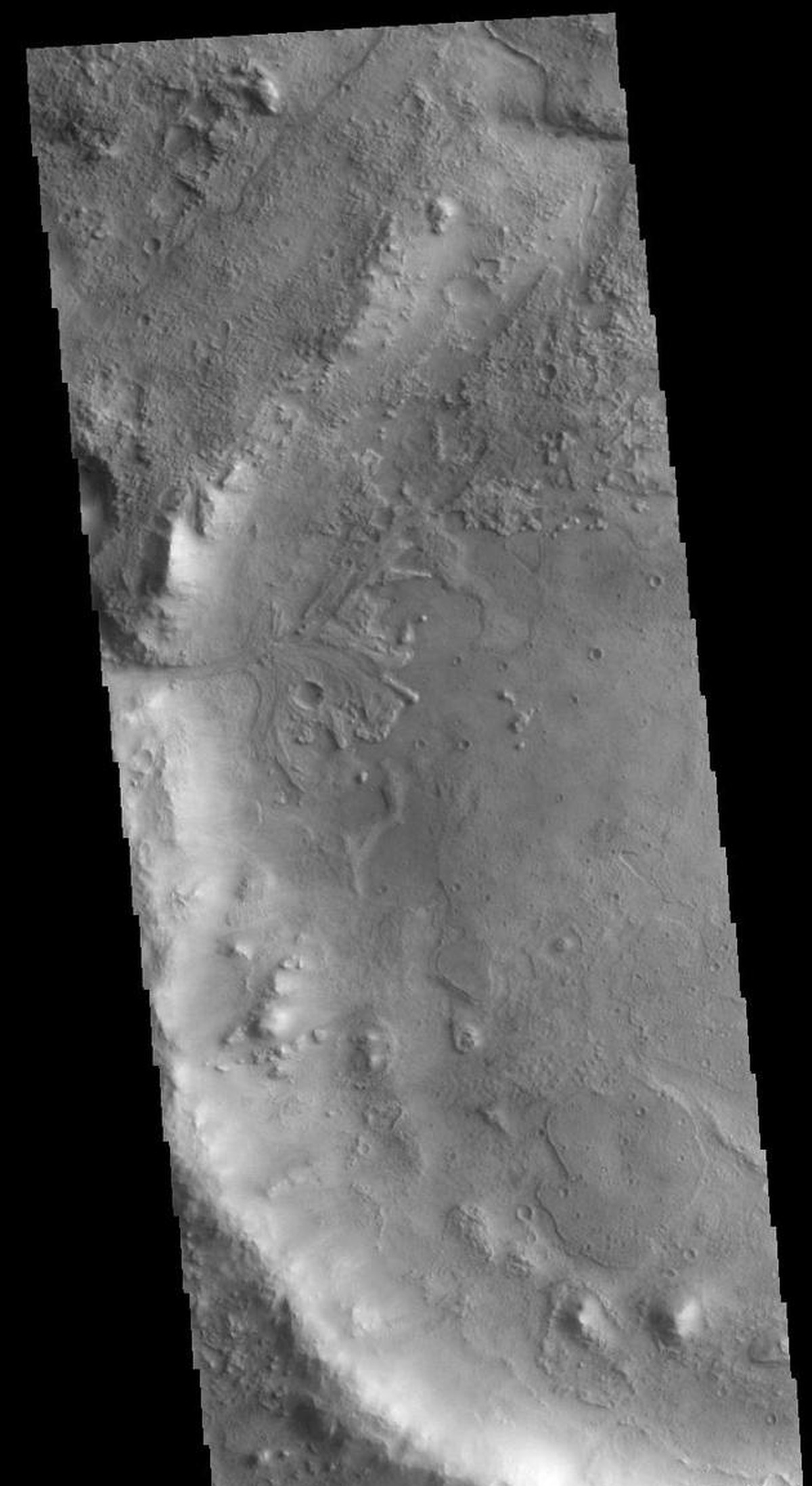
The empirical evidence that Mars once possessed an active hydrological cycle is etched into its geomorphology. High-resolution orbital imaging from MRO’s HiRISE and Mars Express’s High Resolution Stereo Camera (HRSC) has documented thousands of ancient fluvial landforms:
– **Dendritic Valley Networks:** Extensive branched drainage channels observed across the ancient southern cratered highlands. The branching ratios and cross-sectional drainage densities of these valleys match terrestrial river networks formed by long-duration precipitation runoff rather than brief groundwater sapping.
– **Inverted Stream Channels:** Where ancient riverbeds were filled with durable gravels or cemented by authigenic minerals, subsequent eolian wind erosion stripped away the softer surrounding mudstones over billions of years, leaving the ancient riverbeds standing elevated as sinuous, winding ridges above the landscape.
– **Alluvial Fans and Deltas:** Depositional sedimentary lobes formed where flowing rivers emptied into standing bodies of water. The most spectacular example on Mars is the **Jezero Crater Delta**—a pristine fan-delta complex measuring tens of kilometers across, exhibiting distinct bottomsets, foresets, and topset sedimentary bedding indicative of a sustained, long-lived lacustrine (lake) environment.
| Geological Epoch | Time Interval | Dominant Climate State | Characteristic Mineralogy | Fluvial & Aqueous Landforms |
|---|---|---|---|---|
| Noachian Epoch | 4.5 to 3.7 Ga | Warm, wet, dense CO2 greenhouse | Phyllosilicates (Smectite, Kaolinite) | Dendritic valley networks, crater paleolakes |
| Hesperian Epoch | 3.7 to 3.0 Ga | Cooling, volcanic, acidic runoff | Hydrated Sulfates (Jarosite, Gypsum) | Catastrophic mega-flood outflow channels |
| Amazonian Epoch | 3.0 Ga to Present | Cold, hyper-arid, thin atmosphere | Anhydrous Ferric Oxides (Hematite) | Eolian dune migration, polar ice layering |
Clay Mineralogy and the Hydrated Mineral Record
The transition of Martian surface chemistry over geological time is mirrored by its mineralogical evolution, deciphered through orbital infrared spectroscopy (specifically the OMEGA instrument on Mars Express and CRISM on MRO).
This evolution follows the **Bibring Mineralogical Paradigm**:
– **Phyllosilicate Era (Noachian):** In neutral-to-alkaline, low-temperature water environments, primary basalt minerals (olivine and pyroxene) weathered into hydrous aluminum- and magnesium-rich clay minerals (phyllosilicates), such as smectite, nontronite, saponite, and kaolinite. Clays are exceptional repositories for biosignature preservation because their layered silicate sheet structures expand, trapping and shielding organic molecules from ultraviolet and ionizing radiation.
– **Sulfate Era (Hesperian):** As volcanic SO2 emissions acidified surface waters, clay formation ceased and was replaced by hydrated sulfates, including gypsum (CaSO4·2H2O), bassanite, jarosite (KFe3(SO4)2(OH)6), and kieserite. The discovery of jarosite by the Opportunity rover proved that Hesperian waters were hyper-saline and acidic.
– **Ferric Oxide Era (Amazonian):** In the absence of liquid water, slow atmospheric photochemical oxidation of iron-bearing silicate dust produced nanophase hematite (alpha-Fe2O3) and anhydrous ferric oxides, imparting the characteristic red-ochre coloration that defines Mars today.
Jezero Crater: Stratigraphy and Sedimentology of an Ancient Lake Basin
Selected as the landing site for the Perseverance rover, the 45-kilometer-wide **Jezero Crater** was formed by an asteroid impact during the early Noachian epoch. Shortly thereafter, a breach in the crater’s western rim allowed an active river system (Neretva Vallis) to empty into the basin, forming a deep, stable crater lake covering hundreds of square kilometers.
Perseverance’s geological exploration of Jezero has unraveled a complex sedimentary history:
– **The Crater Floor (Máaz and Séítah Formations):** Contrary to pre-landing expectations that the crater floor was composed of lacustrine mudstones, rover drilling revealed coarse-grained igneous rocks—specifically cumulate olivine-rich gabbros and pyroxene basalts. These rocks formed from an ancient lava lake or magma intrusion that later underwent aqueous carbonate alteration, precipitating siderite and magnesite inside rock pores.
– **The Western Delta Front (Shenandoah and Tenacity Formations):** Driving onto the delta fan, Perseverance encountered fine-grained sedimentary mudstones and siltstones interbedded with coarse conglomerate layers. The conglomerate boulders indicate high-energy episodic flood surges capable of transporting large rocks from outside the crater rim, while the fine-grained mudstones represent tranquil, deep-water sedimentation ideal for settling microscopic organic matter.
Biosignature Criteria: Microfossils, Stromatolites, and Chemical Fossils
The ultimate goal of Martian paleoclimatology and sedimentology is establishing definitive proof of whether life emerged on ancient Mars. Astrobiologists search for three distinct classes of biosignatures:
1. **Morphological Biosignatures (Microfossils & Stromatolites):** Structural relics of ancient microorganisms preserved in fine-grained silica (chert) or carbonate rocks. On Earth, the earliest evidence of life consists of 3.48-billion-year-old stromatolites in Western Australia—laminated mineral structures formed by photosynthetic microbial mats trapping sediment. Perseverance searches deltaic sedimentary layers for analogous micro-laminations and biomorphic textures.
2. **Chemical Biosignatures (Bio-Essential Organics):** Complex hydrocarbon molecules characteristic of cellular life, such as long-chain lipids, hopanoids, isoprenoids, and chiral amino acids. While abiotic chemical synthesis (such as Fischer-Tropsch type reactions or carbonaceous chondrite meteoroid delivery) can produce simple organics, biological synthesis creates distinct enantiomeric (chiral) excesses and specific carbon chain-length clustering.
3. **Isotopic Biosignatures:** Living organisms preferentially utilize the lighter stable isotope of carbon (Carbon-12) over Carbon-13 due to the thermodynamic efficiency of enzymatic carbon fixation. A rock sample displaying a significant negative delta-C-13 isotopic excursion relative to abiotic carbonate standards would constitute compelling evidence of biological metabolism.
Because definitive verification of biosignatures requires analytical instruments (such as transmission electron microscopy, synchrotron X-ray diffraction, and high-resolution isotope ratio mass spectrometry) too massive and power-hungry to fly on a rover, the conclusive answer to whether Mars was alive resides in the **Mars Sample Return** campaign.
Atmospheric Loss Mechanics: Solar Wind Sputtering and MAVEN Telemetry
A foundational question in planetary paleoclimatology is: where did Mars’s ancient, dense atmosphere and water go? If Mars once had sufficient greenhouse gases to support standing lakes and rivers, why is modern Mars a freezing, sub-millibar desert?
The answer was empirically resolved by NASA’s **MAVEN (Mars Atmosphere and Volatile EvolutioN)** mission, which entered Mars orbit in 2014. MAVEN discovered that atmospheric loss was driven primarily by the demise of the planetary magnetic field:
– When Mars’s molten iron core solidified roughly 4.0 billion years ago, the global dipole magnetosphere collapsed, exposing the unshielded upper atmosphere directly to the supersonic solar wind.
– Solar wind ions (protons and alpha particles) collide with neutral gas atoms in the Martian exosphere, transferring kinetic energy in a process known as **Sputtering**, knocking oxygen and carbon atoms directly out into interplanetary space.
– Photochemical dissociation of water vapor by solar ultraviolet radiation releases hydrogen atoms, which are so light that they readily achieve thermal escape velocity (Jeans escape).
MAVEN measured that Mars loses roughly 100 grams of atmospheric gas every second under quiet solar conditions, which spikes by more than an order of magnitude during Coronal Mass Ejections (CMEs) and solar flares, confirming that solar stripping destroyed Mars’s habitable surface climate.
Active Methane Detection, Seasonal Plumes, and ExoMars TGO Constraints
One of the most intensely debated enigmas in Martian planetary science is the sporadic detection of atmospheric methane (CH4). On Earth, over 95% of atmospheric methane is biological in origin, produced by methanogenic archaea in anoxic environments. Because methane in the Martian atmosphere is rapidly destroyed by solar ultraviolet photolysis and oxidation within an estimated photochemical lifetime of approximately 300 years, any detectable methane must be continuously or intermittently replenished by active modern sources.
Curiosity’s Tunable Laser Spectrometer (TLS) inside the SAM suite has measured a persistent background methane concentration averaging 0.41 parts per billion by volume (ppbv) in Gale Crater, punctuated by dramatic episodic plume spikes reaching up to 21 ppbv during the late Martian summer. These seasonal fluctuations suggest a subsurface temperature-dependent desorption mechanism, potentially involving the release of methane gas trapped within deep subsurface clathrate hydrates or active sub-surface water-rock serpentinization reactions.
In contrast, the European-Russian ExoMars Trace Gas Orbiter (TGO), measuring the global atmosphere from orbit using high-sensitivity solar occultation spectrometers (NOMAD and ACS), has reported an upper detection limit of less than 0.05 ppbv throughout the bulk atmosphere, finding virtually no global methane signatures. This discrepancy between rover ground measurements and orbital observations presents a profound scientific puzzle. Hypotheses to reconcile the data suggest that methane is released locally from crater fractures at night when planetary boundary layer mixing is suppressed, and then rapidly destroyed or sequestered near the surface before it can mix into the upper atmosphere detected by orbiters.
Astrobiological Synthesis: Reconstructing the Paleo-Environmental Envelope
Synthesizing the geological, mineralogical, and atmospheric evidence collected across three decades of robotic Mars exploration demonstrates that ancient Mars was not merely occasionally wet, but sustained stable, integrated habitable environmental systems for hundreds of millions of years during the late Noachian and early Hesperian epochs. The convergence of circum-neutral water chemistry, abundant bio-essential elements (carbon, hydrogen, nitrogen, oxygen, phosphorus, and sulfur—the CHNOPS suite), pervasive energy gradients from active hydrothermal volcanism and serpentinization, and protective sedimentary deposition environments matches every terrestrial parameter required for the abiogenesis and sustained proliferation of chemolithoautotrophic microbial life.
Whether life actually emerged within these ancient Martian lake basins remains the defining empirical question of contemporary planetary science. Even if future sample analyses confirm that Mars remained prebiotic, determining why a planet with identical foundational ingredients and abundant surface water failed to produce a sustained biosphere will provide profound insights into the rarity, resilience, and unique geochemical catalysts that allowed life to flourish on Earth.
Subsurface Hydrogeology: Permafrost, Glacial Lobes, and Deep Saline Aquifers
Although liquid water cannot permanently persist on the modern Martian surface, billions of cubic kilometers of water remain frozen within the planet’s subsurface cryosphere.
Radar sounding from the SHARAD (Shallow Radar) instrument on MRO and MARSIS on Mars Express has mapped colossal subsurface ice reservoirs:
– **Debris-Covered Glaciers (Lobate Debris Aprons):** Massive flow-like ridges extending from mountain massifs across mid-latitudes (30° to 50° North and South). Radar dielectric measurements confirmed these aprons consist of 90% pure water ice, protected from sublimation into the dry atmosphere by an overlying blanket of rocky debris only a few meters thick.
– **The Polar Layered Deposits (PLD):** Kilometer-thick ice caps at both poles composed of alternating strata of clean water ice, carbon dioxide dry ice, and windblown dust, recording orbital climate cycles over millions of years.
– **Deep Hypersaline Liquid Water:** In 2018, MARSIS detected strong basal radar reflections beneath the South Polar ice sheet at 1.5 kilometers depth, interpreted by some teams as subglacial hypersaline brine lakes saturated with perchlorate salts, which suppress the freezing point of water down to -70°C.
These vast subsurface water reserves represent both the primary paleoclimatological archive of Mars and the indispensable in-situ resource required to sustain permanent human scientific research bases.
Furthermore, the sedimentological analysis of the Jezero delta reveals distinct grain-size sorting and cross-stratified bedding structures that reflect sustained, rhythmic seasonal water discharges. The presence of fine-grained carbonate-rich lithologies provides an ideal geochemical matrix for preserving fragile organic biosignatures, as rapid mineral precipitation can encapsulate cellular organic molecules before oxidative degradation occurs in the ancient Martian environment.